





News and Information
Focus on Industry & Yuanfa Updates
Lithium Iron Phosphate Batteries: A Safer Choice for Modern Energy Storage
Lithium iron phosphate batteries, commonly known as LiFePO₄ or LFP batteries, are becoming an important energy storage solution for industrial, commercial, and renewable energy applications. They are valued for their stable chemistry, long service life, and reliable performance in demanding operating environments.
What Is a Lithium Iron Phosphate Battery?
A lithium iron phosphate battery is a type of lithium-ion battery that uses lithium iron phosphate as the cathode material. Like other rechargeable batteries, it stores electrical energy through the movement of lithium ions between the cathode and anode during charging and discharging.
The use of iron and phosphate gives the battery a stable chemical structure. This helps support safe operation, consistent performance, and good resistance to heat when the battery is correctly designed, installed, and managed.
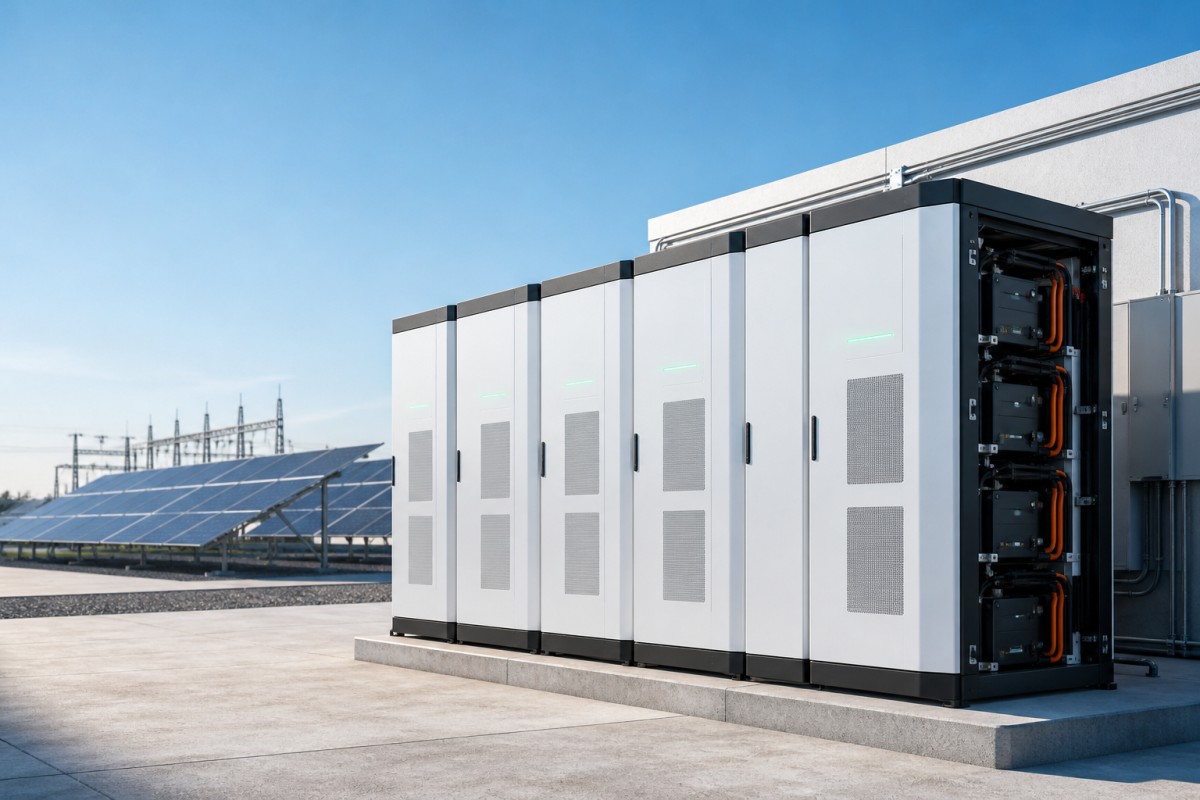
Modern lithium iron phosphate battery storage cabinets used for renewable energy and backup power applications.
How Does an LFP Battery Work?
During charging, electrical energy causes lithium ions to move from the cathode to the anode. During discharge, the ions move back toward the cathode, while electrons flow through the external circuit to provide usable electrical power.
A battery management system, or BMS, monitors important operating conditions such as voltage, current, temperature, and charging status. It helps maintain balanced battery operation and provides protection against conditions such as overcharging, over-discharging, and excessive temperature.
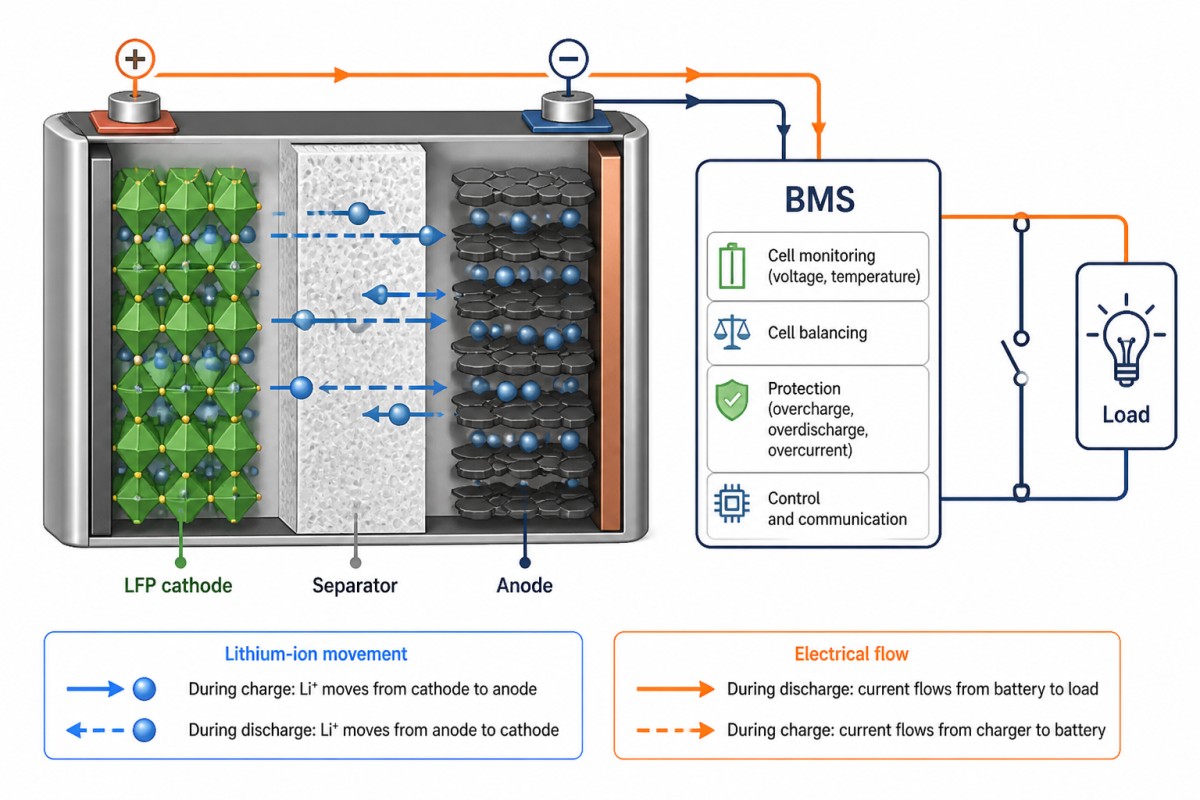
Simplified illustration of the LFP battery structure, lithium-ion movement, and battery management system.
Key Advantages of LFP Batteries
Improved Safety
Safety is one of the main reasons why LFP batteries are widely considered for energy storage. Their stable cathode material is less likely to experience thermal instability under normal operating conditions. However, suitable battery management, installation, ventilation, and protection systems remain essential.
Long Cycle Life
LFP batteries are suitable for applications that require frequent charging and discharging. They are commonly considered for solar energy storage, backup power, microgrids, and industrial energy management, where the battery may be used on a daily basis.
Stable Performance
These batteries can provide dependable output during regular operation. Their performance depends on factors such as system design, operating temperature, charging conditions, and the quality of the battery management system.
Reduced Dependence on Certain Materials
LFP batteries do not use cobalt or nickel in their cathode chemistry. This can reduce dependence on certain raw materials. Responsible recycling and end-of-life management are still important parts of the battery lifecycle.
Common Applications
Lithium iron phosphate batteries are used in many energy-related systems, including:
- Solar and wind energy storage
- Commercial and industrial backup power
- Data center and telecommunications backup systems
- Electric vehicles and low-speed electric equipment
- Off-grid and microgrid power systems
- Residential energy storage
- Portable and mobile power equipment
In renewable energy projects, LFP batteries can store electricity generated during periods of high solar or wind production. The stored energy can then be used when renewable generation is lower or electricity demand increases.
What Should Buyers Consider?
Before selecting an LFP battery system, buyers should evaluate the required voltage, capacity, discharge rate, operating temperature, installation space, and expected usage frequency. It is also important to check the battery management system, thermal protection, enclosure design, communication functions, maintenance requirements, and compatibility with inverters or other power equipment.
The right solution should be selected according to the specific application rather than battery capacity alone. System integration, charging equipment, safety protection, installation conditions, and operating environment all influence long-term performance.
Conclusion
Lithium iron phosphate batteries provide a practical option for customers seeking stable, safe, and durable energy storage. With experience in electrical equipment and energy storage solutions, Yuanfa Power can support customers in selecting LFP battery products according to their specific application and power requirements.
Get a message