




News and Information
Focus on Industry & Yuanfa Updates
Cable Knowledge Guide: Types, Structure, Applications and How to Choose the Right Cable
Introduction
Electrical cables are one of the most important components in modern power systems. They are widely used in residential buildings, industrial facilities, infrastructure projects and renewable energy systems. This article explains cable structure, common types, applications and selection tips.
What Is an Electrical Cable?
An electrical cable is designed to transmit electrical power or signals. A typical cable includes a conductor, insulation layer, shielding layer and outer sheath. Different structures are designed for different environments and applications.
Main Structure of Electrical Cables
1. Conductor: The core part responsible for carrying electrical current. Copper and aluminum are commonly used materials.
2. Insulation Layer: Protects the conductor and prevents electrical leakage. Common materials include PVC, XLPE and LSZH.
3. Shielding Layer: Reduces electromagnetic interference and improves signal stability.
4. Outer Sheath: Protects the cable from moisture, mechanical damage, UV radiation and environmental conditions.
Common Types of Electrical Cables
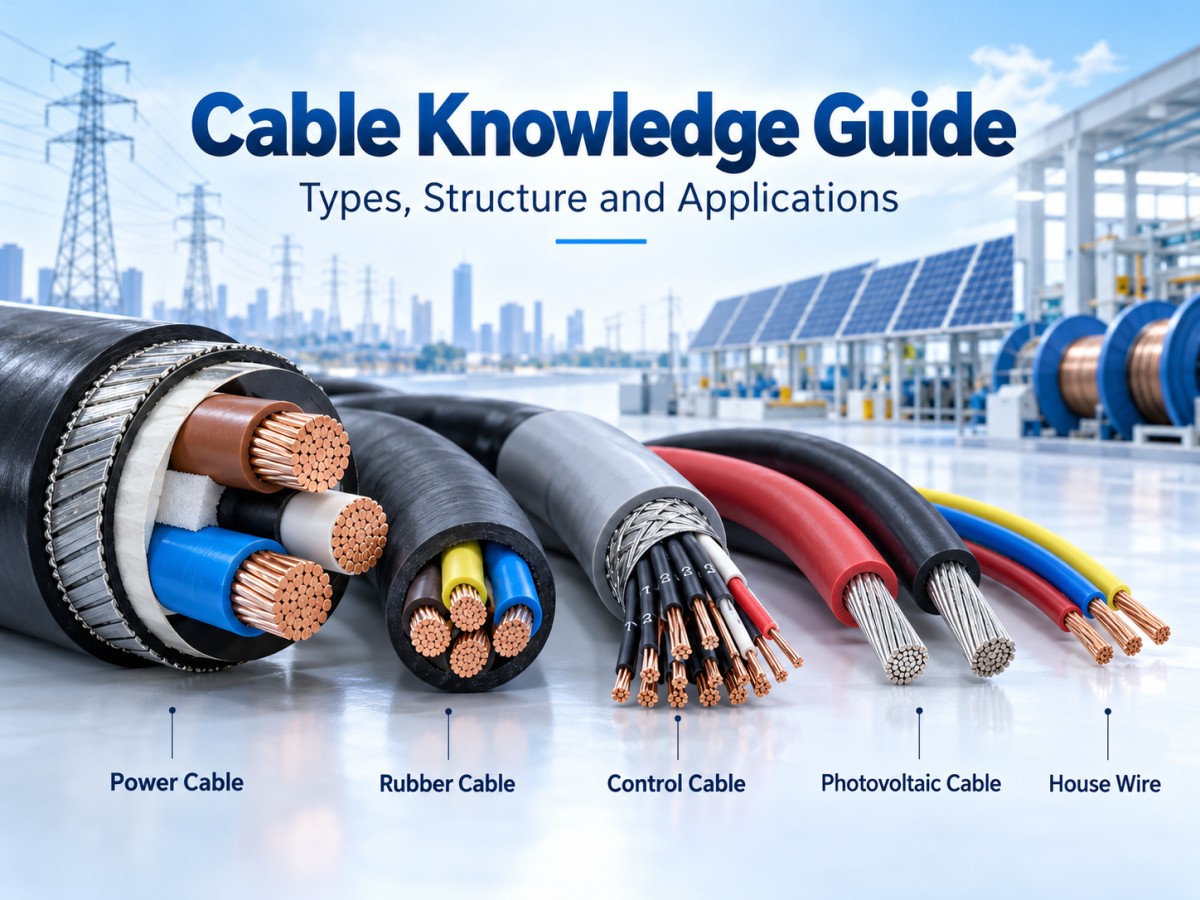
Power Cable: Used for power transmission and distribution in industrial plants, buildings and infrastructure projects.
Rubber Cable: Flexible and durable cables used for construction equipment, portable machines and harsh environments.
Control Cable: Used for signal transmission and industrial automation systems.
Photovoltaic Cable: Designed for solar systems, connecting PV panels, inverters and energy storage systems.
House Wire: Commonly used for residential and commercial electrical installation.
Cable Applications in Renewable Energy
Solar and energy storage systems require reliable cable connections. A typical system includes Solar Panels → PV Cables → Solar Inverter → Battery Energy Storage System → Electrical Loads.
How to Choose the Right Cable?
Customers should consider application environment, voltage requirements, current capacity, conductor material, insulation type, quality standards and supplier capability when selecting cables.
Conclusion
Electrical cables are the foundation of modern power and renewable energy systems. Choosing suitable cables improves safety, efficiency and long-term reliability for residential, commercial and industrial projects.
Get a message