





News and Information
Focus on Industry & Yuanfa Updates
Solar Panels Explained: How They Work, Types, Benefits and Selection Guide
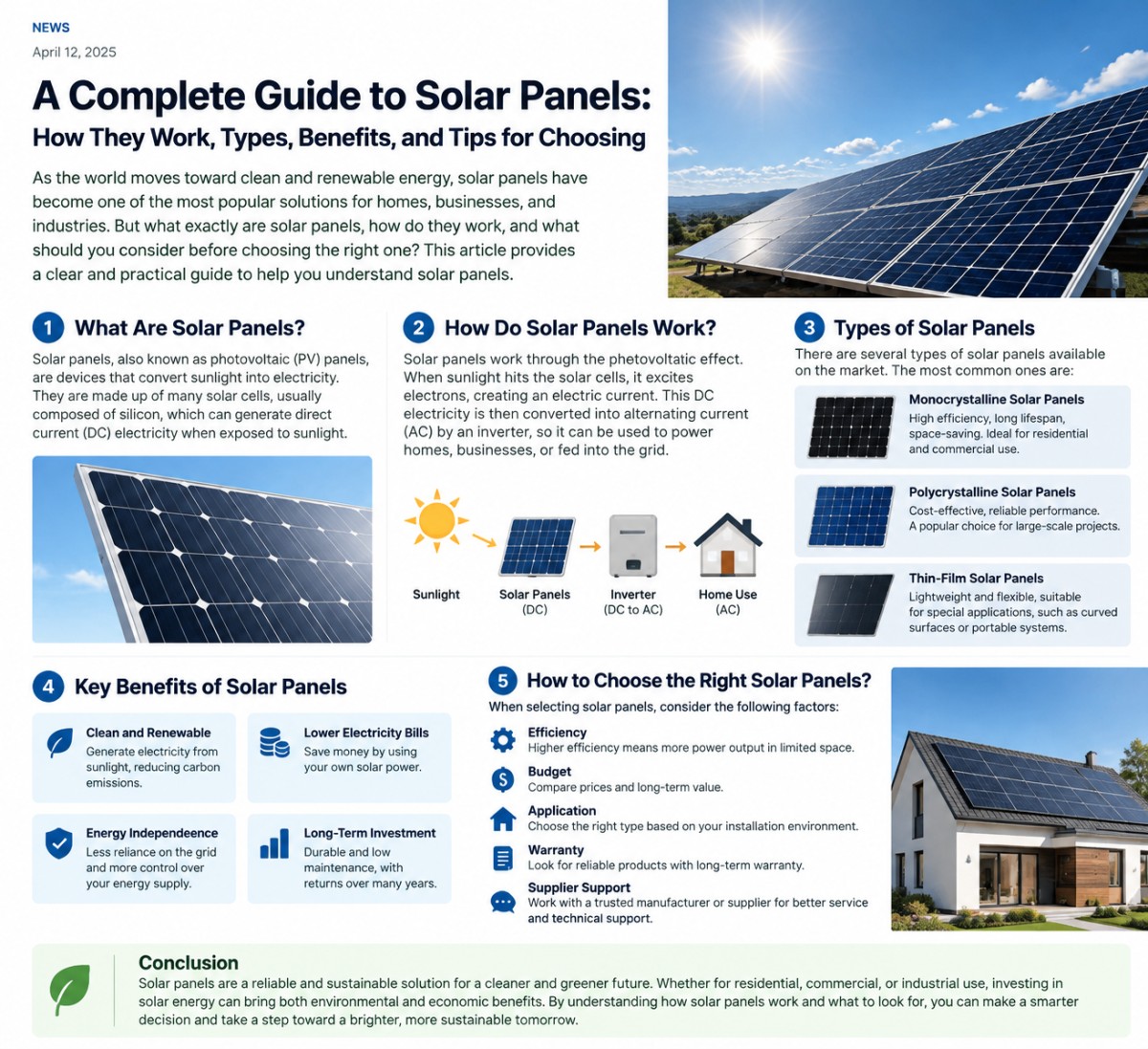
With the global transition toward renewable energy, solar photovoltaic (PV) technology has become an important solution for homes, businesses and industrial projects. This article introduces the basic knowledge of solar panels, including working principles, main types, advantages and selection tips.
1. What Are Solar Panels?
Solar panels, also known as photovoltaic (PV) panels, are devices that convert sunlight into electricity. They are made of multiple solar cells, usually using silicon materials. When sunlight reaches the cells, electric energy is generated through the photovoltaic effect.
2. How Do Solar Panels Generate Electricity?
Solar cells produce direct current (DC) electricity when exposed to sunlight. A solar inverter converts DC electricity into alternating current (AC), which can power household appliances, commercial facilities or feed energy into the grid.
3. Common Types of Solar Panels
Monocrystalline solar panels are known for high efficiency and long service life. Polycrystalline panels provide a cost-effective solution for many applications. Thin-film solar panels are lightweight and suitable for special installation environments.
4. Benefits of Solar Panels
Solar energy is clean, renewable and helps reduce carbon emissions. Solar systems can lower electricity costs, improve energy independence and provide long-term energy value.
5. How to Select Solar Panels?
Customers should consider efficiency, installation location, product quality, warranty, supplier capability and after-sales support before choosing solar panels.
Conclusion
Solar panels are an important technology for the future of sustainable energy. Understanding PV technology helps customers choose suitable solar solutions for residential, commercial and industrial needs.
Get a message