




News and Information
Focus on Industry & Yuanfa Updates
How a Modern Photovoltaic System Turns Sunlight into Reliable Power
A complete commercial photovoltaic installation combines solar modules with power conversion and electrical distribution equipment.
Solar power is no longer defined by panels alone. A modern photovoltaic system is an integrated electrical solution that generates direct-current electricity, converts it into usable alternating current, distributes power safely and, when required, stores surplus energy for later use.
This system-level approach matters. Reliable performance depends not only on module efficiency, but also on equipment compatibility, cable sizing, protection design, installation quality and long-term maintenance. Understanding these elements helps project owners compare solutions more effectively and avoid focusing on a single component.
What Is a Photovoltaic System?
A photovoltaic, or PV, system converts sunlight directly into electricity. Solar cells inside each module produce direct-current (DC) power when exposed to light. Multiple modules are connected to form strings and arrays sized for the required output.
Because most buildings and utility networks use alternating current (AC), the DC power must pass through an inverter. The inverter converts the electricity into AC power with the correct voltage and frequency. From there, distribution and protection equipment directs the power to building loads, the utility grid or both.
Depending on the project, the system may be grid-connected, off-grid or hybrid. A hybrid configuration normally combines solar generation with battery storage and may also work with the utility grid or a backup generator.
The Main Components and Their Roles
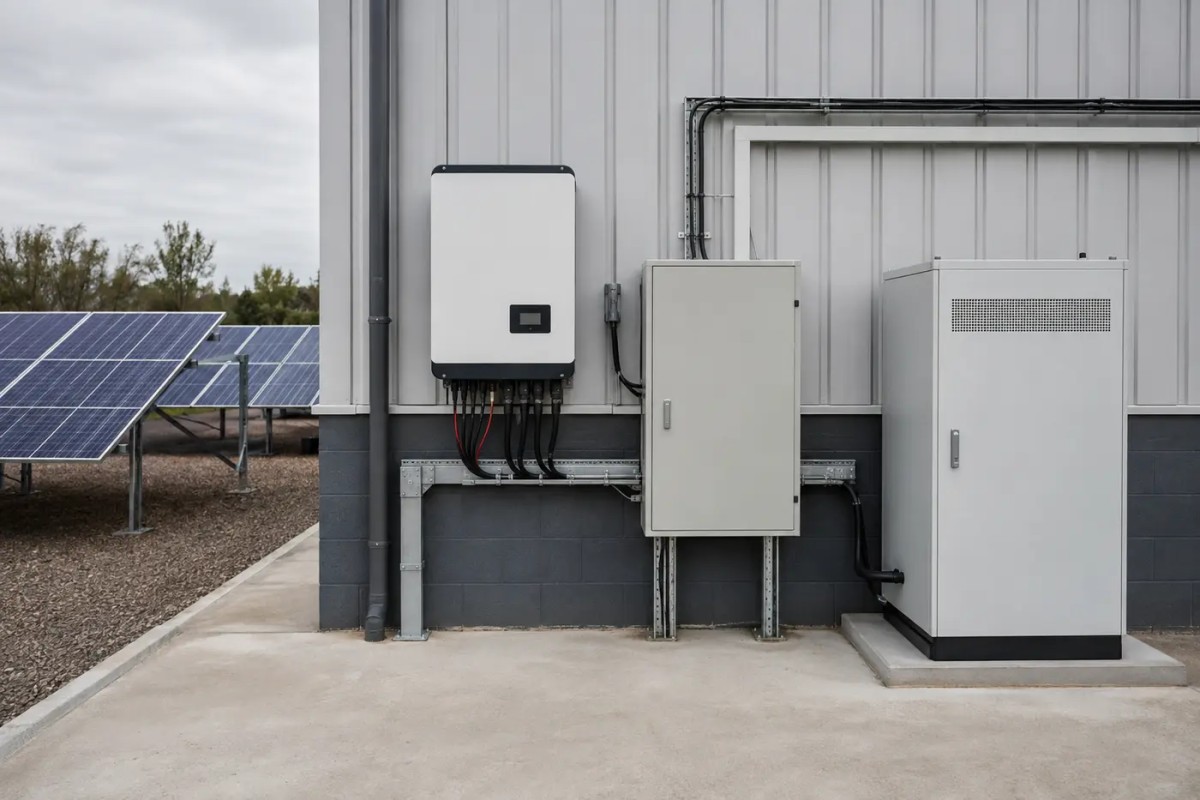
Typical system elements include PV modules, an inverter, protected cable routes, a distribution cabinet and optional battery storage.
1. Solar modules
Modules capture solar energy and produce DC electricity. Project design should consider available space, orientation, shading, local climate, mechanical loading and the electrical characteristics of the selected modules.
2. Mounting structure
The mounting system secures modules to a roof, the ground or another structure. It must suit the installation environment and applicable wind, snow, corrosion and structural requirements.
3. Solar inverter
The inverter is the power-conversion center of the system. In addition to changing DC into AC, modern inverters commonly monitor operating conditions and provide protective functions. The correct inverter type and capacity depend on array configuration, grid requirements and project scale.
4. Cables and connectors
PV cables carry electricity between modules, inverters and distribution equipment. Cable selection should account for voltage rating, current capacity, temperature, sunlight exposure, routing distance and local installation rules. Correct connectors and professional termination are essential for reducing electrical and fire risks.
5. Distribution and protection equipment
Combiner boxes, distribution boards and switchgear help isolate circuits and protect the system against abnormal current, short circuits and surge events. The exact design varies by system voltage, capacity and local code. Protective devices must be coordinated rather than selected independently.
6. Battery energy storage
Battery storage is optional, but it can increase energy flexibility. A properly designed battery system may shift solar energy to evening hours, support selected loads during an outage or help manage peak demand. Actual backup capability depends on battery capacity, inverter configuration, load priority and control strategy.
What Determines Real-World Performance?
Rated equipment values do not automatically equal field performance. Energy output changes with solar irradiation, temperature, shading, soiling, cable losses, inverter efficiency and system availability. Good design begins with an assessment of the site and the customer’s load profile rather than a standard equipment package.
Installation quality is equally important. Poor cable routing, mismatched connectors, inadequate ventilation or incorrectly coordinated protection can reduce reliability even when the individual products are technically suitable.
Monitoring helps operators identify unusual production patterns and plan maintenance. Routine inspections should follow the equipment manufacturer’s instructions and applicable local standards. Work on energized equipment should only be performed by qualified personnel.
How to Evaluate a PV System Proposal
Before approving a project, buyers should ask several practical questions:
· Is the design based on site conditions and actual electricity consumption?
· Are the module, inverter, cable and protection ratings compatible?
· Which standards and local grid requirements apply?
· What assumptions are used in the energy-yield estimate?
· How will the equipment be monitored, maintained and supported?
· If storage is included, which loads require backup and for how long?
A clear proposal should explain these points without promising identical savings or output for every location. Solar performance is site-specific, and financial results also depend on electricity tariffs, incentives, financing and operating conditions.
From Individual Products to a Complete Solution
The most effective photovoltaic projects treat generation, conversion, protection, distribution and storage as one coordinated system. This reduces compatibility risks and makes commissioning, operation and future expansion easier.
For commercial, industrial and utility applications, early coordination between the project owner, designer, equipment supplier and installer can prevent costly changes later. The goal is not simply to install more panels, but to build a safe, maintainable system that delivers dependable power over its operating life.
Planning a photovoltaic project?
Share the installation type, target capacity, grid conditions, load profile and storage requirements with our technical team for an initial system discussion.
Get a message