




News and Information
Focus on Industry & Yuanfa Updates
Global Solar Industry Outlook 2026: Growth Is Entering a Stronger and More Practical Phase
The outlook remains positive. Solar is becoming a mainstream source of new power capacity in established and emerging markets, while commercial users are adopting photovoltaic systems to manage energy costs and improve resilience. The next phase of growth is likely to reward projects that combine competitive equipment with sound engineering, grid compatibility and long-term service.
A Record Market With a Broader Foundation
According to the International Energy Agency, global solar PV additions surpassed 600 GW for the first time in 2025, raising cumulative capacity to around 2,800 GW. Thirty countries installed more than 1 GW of solar in a single year—almost twice as many as in 2020.
Why this matters: solar growth is no longer concentrated in only a small group of pioneering markets. A wider base of countries is building experience in project development, financing, installation and operation.
The IEA expects global renewable power capacity to roughly double between 2025 and 2030, with solar PV accounting for almost 80% of the increase. Forecasts can change with policy and market conditions, but the direction is clear: solar is positioned to remain the leading source of renewable capacity expansion.
Four Reasons for Continued Optimism
1. Solar can serve projects of very different sizes
Few power technologies can be deployed across such a wide range—from small off-grid systems and commercial rooftops to large utility plants. This flexibility allows solar to respond to different customer needs, grid conditions and investment levels.
Distributed solar is becoming especially important for factories, warehouses, farms and commercial buildings. The IEA expects distributed applications to represent about 42% of worldwide PV expansion through 2030. For many businesses, the decision is increasingly based on practical energy management rather than environmental positioning alone.
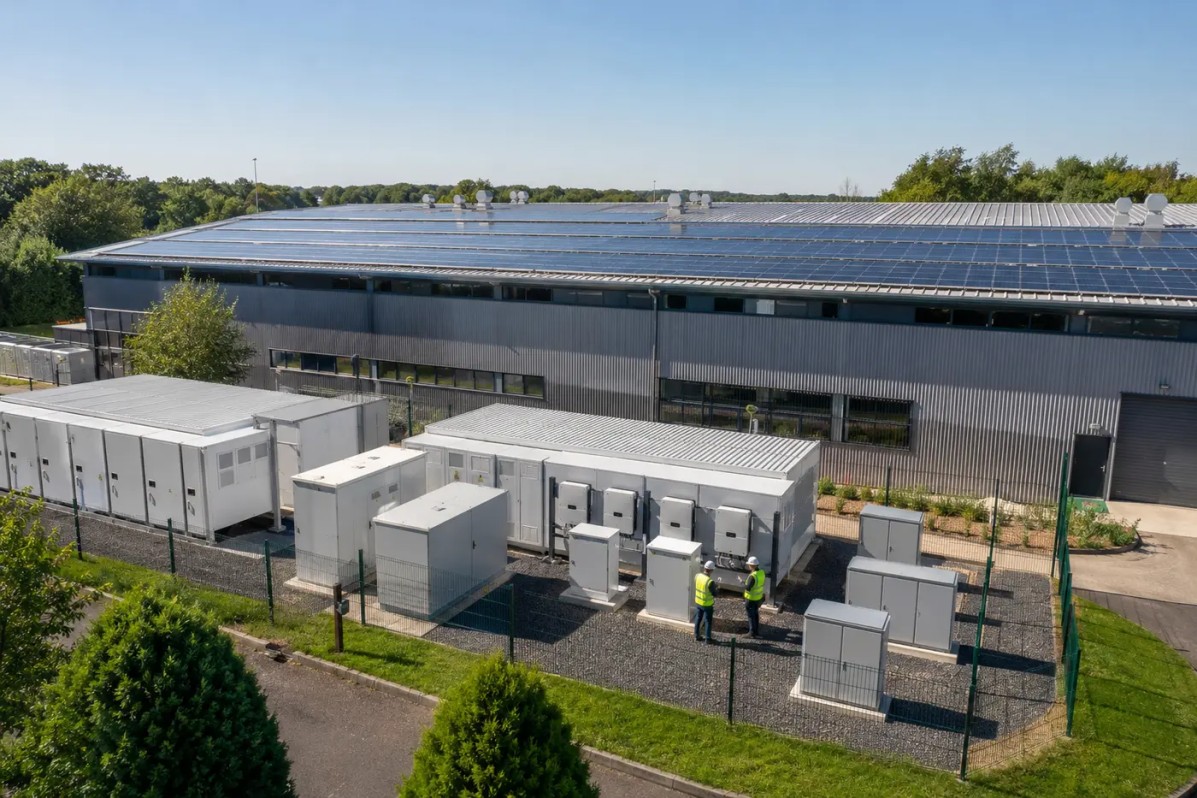
Commercial and industrial solar projects increasingly combine rooftop generation with storage, inverters and coordinated distribution equipment.
2. Energy storage is increasing the value of solar
Solar generation varies by time of day and weather conditions, but battery storage can shift part of that energy to periods when it is more valuable. Storage can also support selected loads, manage peaks and provide grid services when the system is designed for those functions.
The IEA reports that 108 GW of new battery storage capacity was deployed worldwide in 2025, 40% more than in 2024. As storage deployment expands, solar projects can offer greater flexibility instead of being evaluated only by daytime electricity production.
3. Electrification is creating new demand
Factories, data centers, electric transport, cooling systems and digital infrastructure are increasing electricity demand in many markets. Solar cannot meet every requirement by itself, but it can become an important part of a diversified power strategy—particularly when combined with storage, grid supply and backup generation.
4. Grid challenges are creating an infrastructure market
More solar capacity requires more than modules. Projects also need inverters, transformers, cables, combiner boxes, switchgear, protection systems, monitoring and, in many cases, upgraded substations or transmission connections.
This creates opportunities across the electrical equipment value chain. Suppliers that understand system compatibility, technical documentation and local standards can contribute more value than companies competing only on individual product prices.
Challenges Are Real—but They Point to the Next Investment Cycle
The industry still faces grid connection delays, financing constraints, changing trade rules, curtailment and supply-chain risks. A realistic outlook should not ignore them.
However, many of these challenges are also signals of a maturing market. Grid congestion encourages investment in storage and network reinforcement. Price pressure encourages manufacturers to improve efficiency and quality control. More demanding buyers create opportunities for suppliers with stronger engineering, testing and after-sales capabilities.
What the Next Phase Means for Buyers and Suppliers
Project owners should evaluate the complete system rather than choosing components independently. Equipment ratings, protection coordination, cable design, environmental conditions and grid requirements must work together.
For manufacturers and exporters, the strongest opportunities may come from complete or coordinated solutions: solar generation, inverters, energy storage, distribution cabinets, cables and transformers supported by clear technical documentation.
The solar industry’s rapid expansion will not be perfectly smooth. Even so, the combination of record deployment, wider geographic participation, growing storage capacity and rising electricity demand supports a constructive long-term outlook.
Preparing for your next solar project?
Share your target capacity, application, grid voltage, installation environment and storage requirements with our team to discuss a coordinated photovoltaic and electrical solution.
Get a message